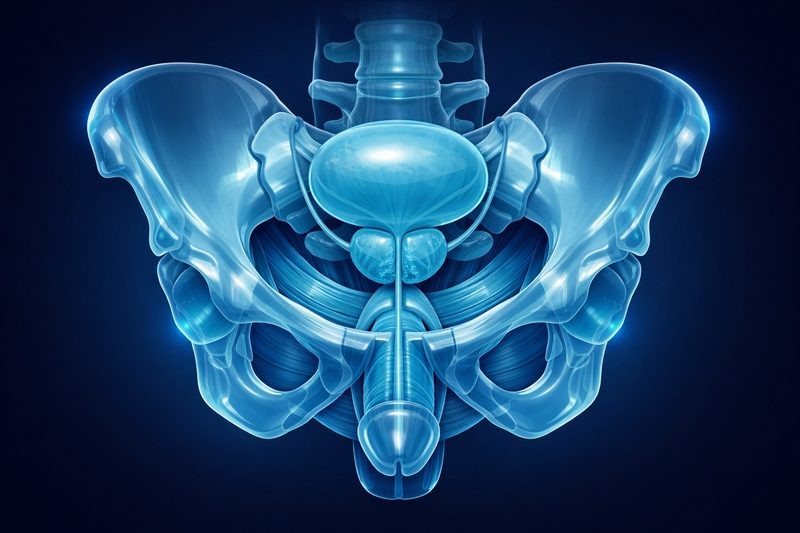
Illustration of the male pelvis and pelvic floor muscles
Urology & Pelvic Rehabilitation

Male Pelvic Floor Rehabilitation and Sexual Function

Pelvic floor rehabilitation is a biofeedback-supported exercise program that teaches men to recognize the muscles at the base of the penis and around the anus, and to strengthen or relax them as needed. In premature ejaculation, 91% of 122 men who completed a 12-week program gained ejaculatory control (Asian J Androl 2018); in erectile dysfunction, 74.5% of 55 men improved (Br J Gen Pract 2004).

3D anatomy
Bulbospongiosus muscleExpels semen during ejaculation, supports erection
Male pelvic floor, viewed from below. Rotate the model yourself.

Do any of these sound familiar?

  • Does your erection start but then fade?
  • Do you feel you cannot let go during sex?
  • Do you feel you cannot delay ejaculation?
  • Do you have a constant sense of tightness in the pelvic area?
Scroll
91% Ejaculatory control in premature ejaculation
(122 patients, 12 weeks)
74.5% Improvement in erectile function
(55 patients, randomized trial)
56% Still in control
after 3 years
9-20 Number of sessions in studies
(13 studies)

What Is the Pelvic Floor and How Does It Affect Sexual Function?

The pelvic floor is the layer of muscle and connective tissue that closes the base of the pelvis. In men, the bulbospongiosus and ischiocavernosus muscles at the base of the penis help maintain erection and drive the expulsion phase of ejaculation. When these muscles are too tight or too weak, erection, ejaculation and pelvic pain complaints can follow (Sex Med Rev 2016).

The pelvic floor is a muscle and fascia complex that forms the floor of the pelvis and works like a hammock. While it supports the bladder, bowel and sexual organs, it also directly influences erection quality, ejaculatory control and orgasm intensity.

The bulbospongiosus and ischiocavernosus muscles in particular play a key role in regulating penile blood flow and in the mechanics of ejaculation. During erection, the bulbospongiosus raises the pressure inside the erectile bodies and helps maintain rigidity; during ejaculation, its rhythmic contractions expel the seminal fluid.

The ischiocavernosus compresses the penile crura, raising intracavernosal pressure and supporting full rigidity. Overactivity (hypertonicity) or weakness (hypotonicity) of these muscles can contribute to clinical problems such as erectile dysfunction, premature ejaculation, delayed ejaculation and chronic pelvic pain.

Pelvic floor problems are often overlooked. A review on the subject highlights the close link between the pelvic floor and erectile dysfunction, ejaculatory and orgasmic disorders and chronic pelvic pain, and recommends pelvic floor physiotherapy as part of holistic care for these patients (Sex Med Rev 2016).

Key Facts

  • The pelvic floor has three muscle layers and underpins sexual function
  • The bulbospongiosus plays a critical role in erection rigidity and ejaculation
  • The ischiocavernosus raises intracavernosal pressure and supports full rigidity
  • Muscle tension (hypertonus) and weakness (hypotonus) cause different complaints
  • Kegel exercises are not right for every man; tight muscles first learn to relax
Tight (hypertonic) pelvic floor

The muscles cannot relax

  • Fullness in the perineum, pelvic pain, pain during or after ejaculation
  • Erections that come and go during sex
  • Incomplete emptying or dribbling after urination

Treatment direction: relaxation, breathing and manual therapy first; squeezing exercises come later.

Weak (hypotonic) pelvic floor

The muscles cannot contract enough

  • Difficulty delaying ejaculation
  • Difficulty maintaining an erection
  • Urinary leakage after prostate surgery

Treatment direction: strengthening and contraction control training with biofeedback.

The distinction is made at examination by assessing muscle tone, contraction strength and the ability to relax. Exercising in the wrong direction can make symptoms worse (Sex Med Rev 2016).

What do the pelvic floor muscles look like in 3D?

The interactive model below shows the male pelvic floor from below (perineal view), layer by layer. The bulbospongiosus and ischiocavernosus muscles wrap the base of the penis, while the external anal sphincter and levator ani form the supporting layer of the anal region. You can rotate the model, switch layers on and off, and tap a muscle to read its function and clinical significance.

The model is a schematic teaching illustration; proportions are simplified. Open the 3D pelvic floor model in full screen.

What Causes Pelvic Floor Dysfunction?

Pelvic floor muscles rarely fail for a single reason; they usually decline through accumulated daily habits. Chronic stress and performance anxiety, prolonged sitting, faulty breathing, constipation, heavy lifting, pressure on the perineum and pelvic surgery are the factors we see most often in clinic. The cards below summarize how each can affect the muscles.

Chronic Stress and Performance Anxiety

Ongoing stress and sexual performance anxiety can cause involuntary, sustained contraction of the pelvic floor muscles. This makes it harder to maintain an erection and to control ejaculation.

Prolonged Sitting

Desk work and a sedentary lifestyle can increase pressure on the perineum and lead to chronic tension in the pelvic floor muscles.

Faulty Breathing Pattern

Shallow chest breathing disrupts the coordination between the diaphragm and the pelvic floor. This keeps the muscles constantly tense and contributes to loss of sexual function.

Chronic Constipation and Heavy Lifting

The excessive intra-abdominal pressure placed on the pelvic floor by chronic straining and heavy lifting impairs muscle function.

Perineal Trauma or Surgery

Perineal pressure from cycling and scar tissue after pelvic surgery or trauma can permanently affect muscle function.

Intense Sport and Incorrect Exercise

Poor breathing and core technique during heavy squats or deadlifts can lead to chronic tension and dysfunction in the pelvic floor.

Which Symptoms Point to a Pelvic Floor Problem?

A pelvic floor problem shows itself as a cluster of symptoms rather than a single one: fullness in the perineum, erections that come and go during sex, difficulty controlling ejaculation, reduced orgasm quality and dribbling after urination are the most common complaints. Diagnosis is based on history, physical examination and pelvic floor muscle assessment, with tests added when needed.

Symptoms

A sense of fullness and tension in the perineum

Erections that come and go during sex

Difficulty controlling ejaculation

Reduced orgasm quality

Pelvic pain and discomfort

A feeling of incomplete emptying after urination

Pain during ejaculation

Diagnostic Process

1

Detailed History

A thorough assessment of sexual history, duration of complaints, lifestyle habits, stress level and accompanying symptoms.

2

Physical Examination

General urological examination, assessment of the perineal region and neurological reflex testing.

3

Pelvic Floor Assessment

Measurement of pelvic floor muscle tone, strength, coordination and ability to relax with dedicated tests.

4

Relevant Tests

Hormone profile, vascular assessment, EMG and imaging when necessary.

5

Personalized Treatment Plan

All findings are evaluated together to build a multidisciplinary treatment plan tailored to the patient.

How Is Pelvic Floor Rehabilitation Carried Out?

Pelvic floor rehabilitation progresses in four stages: assessment, education, breathing work and a personalized exercise program. By watching muscle activity on a biofeedback screen, you learn to contract and relax the right muscle. The program combines clinic sessions with daily home exercises; contraction exercises are only one part of it, and relaxation comes first when the muscles are tight.

1

Assessment

Symptom analysis, physical examination, measurement of pelvic floor tone

2

Education

Anatomy, the link between breathing and the pelvic floor, managing expectations

3

Breathing Work

Diaphragmatic breathing, pelvic synchronization, reducing tension

4

Rehabilitation

Personalized exercise program, biofeedback, manual therapy

🔬 Biofeedback

Real-time monitoring of muscle activity helps the patient notice and control the right muscles. Visual and auditory feedback speeds up learning.

🤲 Manual Therapy

Direct muscle release techniques are applied with a physiotherapist. Methods include trigger point therapy, myofascial release and soft tissue mobilization.

🏠 Home Programs

Daily exercise routines are created to support the clinic sessions. Patients learn breathing, relaxation and strengthening exercises they can do on their own.

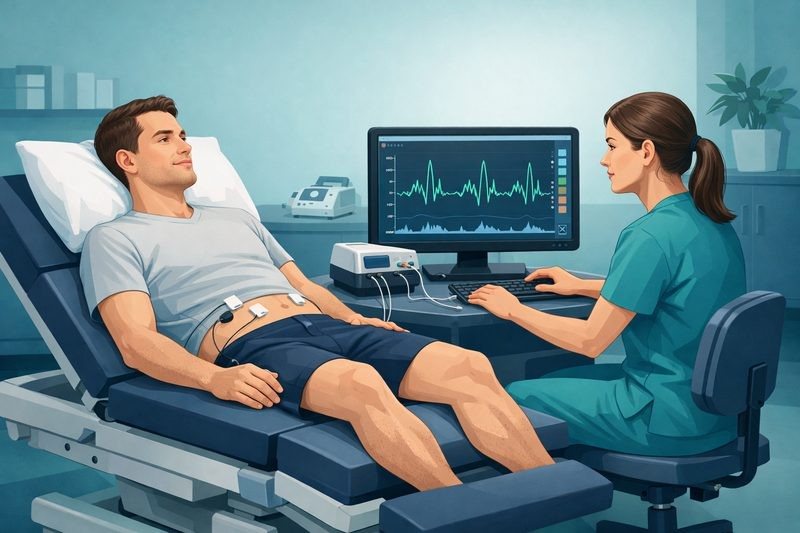
A biofeedback session in pelvic floor rehabilitation

How Effective Is Pelvic Floor Rehabilitation?

The strongest evidence for pelvic floor rehabilitation is in premature ejaculation and erectile dysfunction: in a 12-week program, 91% of 122 men gained ejaculatory control, and in a randomized trial erectile function improved in 74.5% of 55 men. The evidence comes mostly from small studies, and one meta-analysis found exercise alone ineffective in men not taking medication.

Control in Premature Ejaculation

91%
122 patients, 12 weeks (Asian J Androl 2018); 82.5% of 40 patients in the first study (Ther Adv Urol 2014)

Improvement in Erectile Function

74.5%
55 patients, randomized trial: 40% returned to normal, 34.5% improved (Br J Gen Pract 2004)

Ejaculatory Control Maintained After 3 Years

56%
95 patients followed for 36 months; 64% at month 24 (Asian J Androl 2018)

Clear Response in Chronic Pelvic Pain

50%
5 of 10 patients who completed 10 sessions; moderate response in 2 (Transl Androl Urol 2017)
A balanced view: in a systematic review of 13 studies and 912 men, physiotherapy significantly improved erectile and ejaculatory function compared with control groups (Int J Sex Health 2023). By contrast, in a meta-analysis of men with erectile dysfunction not taking medication, pelvic floor exercise alone gave no significant improvement while aerobic exercise did (Andrology 2024). After prostate surgery, only 4 of 12 randomized trials reported a significant erectile benefit (World J Urol 2026).

When Do Results Appear?

2-4 Weeks

First awareness and a better ability to feel the pelvic floor

6-8 Weeks

Noticeable improvement and better symptom control

12 Weeks

When most study programs end; outcome assessment

6-12 Months and Beyond

Gains maintained with a home program; in premature ejaculation, control was maintained in 64% at month 24 and 56% at month 36

What Are the Advantages and Limitations of Pelvic Floor Rehabilitation?

The advantage of pelvic floor rehabilitation is that it involves no medication and the skill learned can last; in premature ejaculation, 56% of patients were still in control after 3 years. Its limitations are that it requires regular practice and may not be enough on its own in vascular erectile dysfunction. The decision is made after examination and muscle assessment.

Advantages

  • Drug-free; few side effects
  • Personalized treatment plan
  • Can be combined with medication
  • Builds body awareness and control
  • In premature ejaculation, gains lasted 3 years in 56% of patients
  • Non-invasive and comfortable

Limitations

  • Results vary from patient to patient
  • Requires regular exercise and motivation
  • Results come gradually, over weeks
  • May not be enough on its own; a multidisciplinary approach is often needed
  • Limited effect on its own in vascular erectile dysfunction
  • A specialized field that requires an experienced physiotherapist

Why Are Urology, Physiotherapy and Sex Therapy Planned Together?

Male sexual complaints often combine muscle, vascular, hormonal and anxiety factors. That is why we plan treatment with three disciplines: urology addresses organic causes and medication, physiotherapy addresses muscle control, and sex therapy addresses anxiety and the relationship. The American guideline also recommends shared decision-making (J Urol 2022).

A holistic approach that plans urology, physiotherapy and sex therapy together

Urology

Ruling out organic causes, coordinating drug therapy, hormonal assessment and planning surgery when needed. Identifying underlying vascular or neurological conditions.

Physiotherapy

Pelvic floor muscle training, real-time biofeedback monitoring, manual therapy techniques, breathing and pelvic floor coordination, and personalized home programs.

Sex Therapy

Psychoeducation, management of performance anxiety, partner relationship and communication, behavioral techniques (sensate focus, stop-start) and cognitive restructuring. Because anxiety tightens the pelvic floor, breathing and relaxation work is built into the program.

Frequently Asked Questions About the Male Pelvic Floor

I have answered the questions I hear most often in clinic, with their sources. The answers are based on guidelines, randomized trials and systematic reviews; your own situation requires an examination and muscle assessment. You can send questions not listed here via WhatsApp, and they are answered confidentially. We go through these questions together before starting treatment.

No. The pelvic floor muscles help maintain erection, drive the expulsion phase of ejaculation and control urination; so the problem can also show up as erections that come and go, difficulty controlling ejaculation, changes in orgasm and urinary complaints. A review on the subject reports a close link between the pelvic floor and male sexual dysfunction (Sex Med Rev 2016).
It can. As anxiety rises, breathing becomes shallow and involuntary contraction can develop in the abdomen and pelvic floor; this tension is thought to make it harder to maintain an erection. The link rests largely on clinical observation and reviews (Sex Med Rev 2016). This is why breathing and relaxation work is added to the program.
Not always. Premature ejaculation programs teach men to recognize the muscles, strengthen them and notice the signal before ejaculation; 91% of the 122 men who completed the program gained control in 12 weeks (Asian J Androl 2018). However, in a tight pelvic floor, squeezing exercises alone can make symptoms worse. Other options, such as medication and behavioral therapy, are discussed at the consultation.
It can, but the evidence is limited. Pelvic floor tension, changes in sensory awareness, medications (especially antidepressants) and relationship factors may play a combined role. The American Urological Association guideline recommends a detailed medical and sexual history and a review of medications in delayed ejaculation (J Urol 2022).
It is a structured program made up of assessment, education, breathing and relaxation work, muscle control training, biofeedback, manual therapy and a home program. In a systematic review covering 13 studies and 912 men, programs lasted 6-12 weeks and 9-20 sessions; exercises were used alone or combined with electrical stimulation and biofeedback (Int J Sex Health 2023).
Not always. In some patients it can be enough on its own; in others it is used together with medication. In a meta-analysis of men with erectile dysfunction not taking medication, pelvic floor exercise alone gave no significant improvement while aerobic exercise did (Andrology 2024). For this reason, medication and lifestyle change remain the priority in vascular erectile dysfunction.
It depends on how long the complaint has lasted, the level of pain and anxiety, and how consistently the exercises are done. In our clinic we usually plan 8-16 sessions; in studies, programs lasted 6-12 weeks and 9-20 sessions (Int J Sex Health 2023). The premature ejaculation protocol used three sessions a week for 12 weeks (Asian J Androl 2018). Sessions are supported by a home program.
No. Kegel exercises are one part of pelvic floor rehabilitation, not all of it. In a tight pelvic floor, squeezing exercises can make symptoms worse, so relaxation, breathing and coordination are worked on first (Sex Med Rev 2016); in weak muscles, contraction exercises take priority.
No. Performance anxiety, prolonged sitting, chronic stress and poor exercise habits can cause pelvic floor related complaints in young men too; young adults also took part in premature ejaculation studies (Asian J Androl 2018). In young men with pelvic pain, the picture can be confused with chronic prostatitis, so a urological examination comes first.
Dr. Niyazi Umut Özdemir, MD, Urologist, UZ Clinic Antalya

Dr. Niyazi Umut Özdemir, MD

Urologist · UZ Clinic, Antalya, Türkiye

I graduated from Ege University Faculty of Medicine in 2000 and completed my urology residency at Ege University in 2005. I have held the Turkish Urological Association Board Certification since 2006. At UZ Clinic, which I founded in 2017, I work with erectile dysfunction, ejaculatory disorders and pelvic floor related complaints. My academic profile can be verified through my ORCID record.

Men's Sexual Health Erectile Dysfunction (ED) Premature Ejaculation Peyronie's Disease Varicocele & Male Infertility Female Sexual Dysfunction HPV / Genital Wart Treatment Shockwave Therapy (ESWT)
Fener Mahallesi, Bülent Ecevit Bulvarı No:23 Kanyon Plaza K:4 D:7, 07160 Muratpaşa/Antalya, Türkiye
⏰ Monday-Friday 09:00-17:30, Saturday 09:00-12:00 (Türkiye time, GMT+3)

Appointments and Contact

At the first visit we listen to your complaints and, through examination and muscle assessment, determine whether the problem is muscle tension or weakness. We then plan the right rehabilitation, and medication if needed, together with you. You can message us on WhatsApp or call.

Address: Fener Mahallesi, Bülent Ecevit Bulvarı No:23 Kanyon Plaza K:4 D:7, 07160 Muratpaşa/Antalya, Türkiye
Opening hours: Monday-Friday 09:00-17:30, Saturday 09:00-12:00

This page is for information only and does not replace a medical diagnosis. Please see a specialist about your symptoms.

This content was prepared to inform the public in line with the regulations of the Ministry of Health of the Republic of Türkiye. Medical content prepared and reviewed by Dr. Niyazi Umut Özdemir, MD, Urologist. Last medical review: 28 September 2026.

References

  1. Cohen D, Gonzalez J, Goldstein I. The Role of Pelvic Floor Muscles in Male Sexual Dysfunction and Pelvic Pain. Sex Med Rev. 2016;4(1):53-62.
  2. Dorey G, Speakman M, Feneley R, et al. Randomised controlled trial of pelvic floor muscle exercises and manometric biofeedback for erectile dysfunction. Br J Gen Pract. 2004;54(508):819-825.
  3. Pastore AL, Palleschi G, Fuschi A, et al. Pelvic floor muscle rehabilitation for patients with lifelong premature ejaculation: a novel therapeutic approach. Ther Adv Urol. 2014;6(3):83-88.
  4. Pastore AL, Palleschi G, Fuschi A, et al. Pelvic muscle floor rehabilitation as a therapeutic option in lifelong premature ejaculation: long-term outcomes. Asian J Androl. 2018;20(6):572-575.
  5. Gbiri CAO, Akumabor JC. Effectiveness of Physiotherapy Interventions in the Management of Male Sexual Dysfunction: A Systematic Review. Int J Sex Health. 2023;35(1):52-66.
  6. Masterson TA, Masterson JM, Azzinaro J, et al. Comprehensive pelvic floor physical therapy program for men with idiopathic chronic pelvic pain syndrome: a prospective study. Transl Androl Urol. 2017;6(5):910-915.
  7. Chen Z, Wang J, Jia J, et al. Effect of different physical activities on erectile dysfunction in adult men not receiving phosphodiesterase-5 inhibitors therapy: a systematic review and meta-analysis. Andrology. 2024;12(8):1632-1641.
  8. Akdagcik Z, Aybal HÇ, Karaaslan M, et al. Pelvic floor muscle training for erectile function in men undergoing radical prostatectomy: a systematic review of randomized controlled trials. World J Urol. 2026;44(1).
  9. Shindel AW, Althof SE, Carrier S, et al. Disorders of Ejaculation: An AUA/SMSNA Guideline. J Urol. 2022;207(3):504-512.